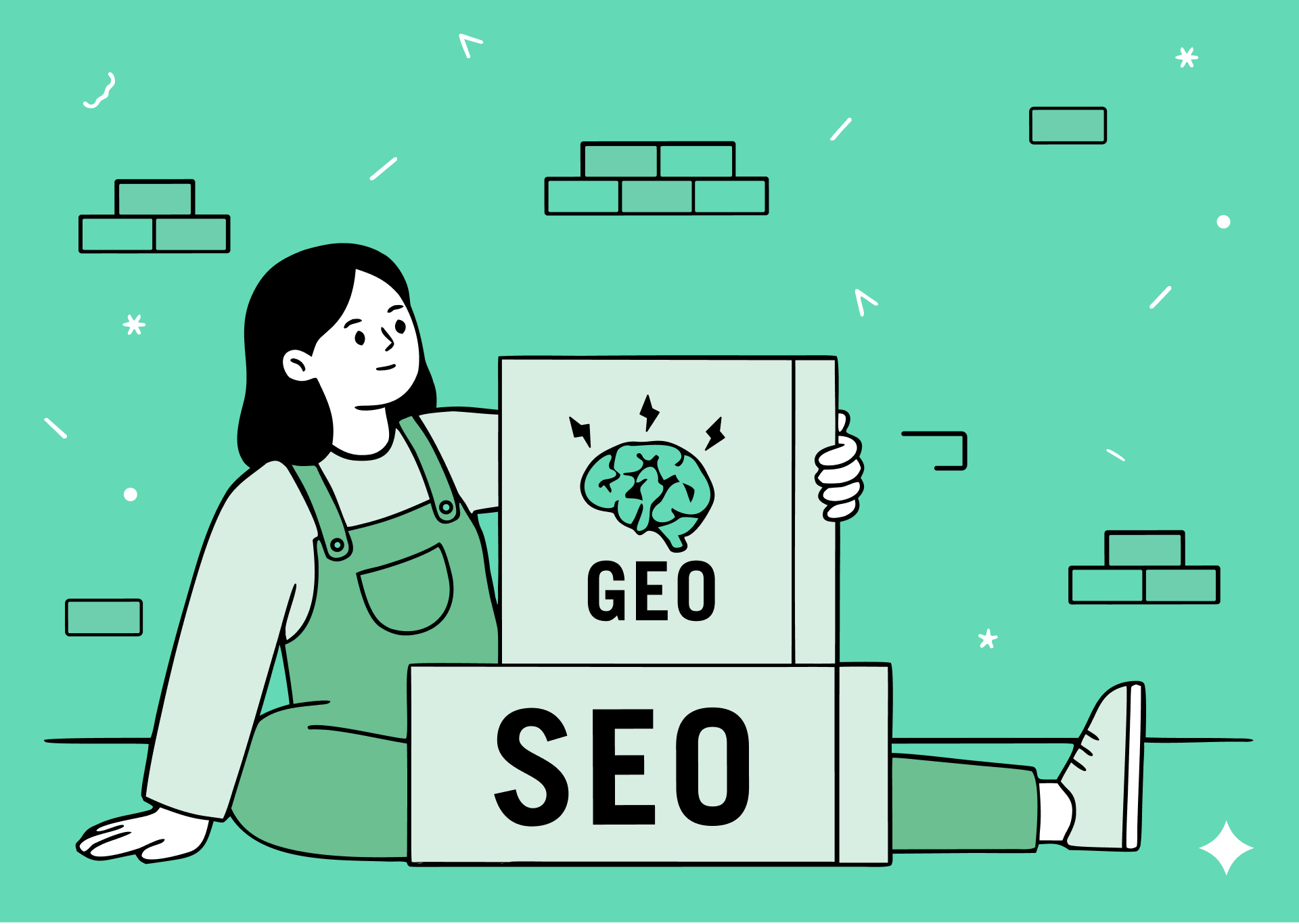
GEO is built on SEO.
TLDR: SEO and GEO aren’t separate disciplines, and treating them like they are is where things start to come unstuck.
There’s a clear sense of momentum – and confusion- behind generative engine optimisation at the moment. AI search is becoming more visible, more widely used, and for many, it feels like a new channel to get ahead in.
However, what’s building is a perfect storm of snake oil salespeople scaring small businesses into expensive GEO visibility services, existing brands quietly undermining the SEO foundations they rely on, and a whole lack of clarity of what is actually what.
GEO and SEO – Intent & Framing
The issue is less about intent and more about framing. SEO and GEO are being treated as distinct systems, each with their own rules and tactics, when in reality they are deeply interconnected.
AI programmes use the internet to source answers. Therefore, strong organic performance increases the likelihood of being surfaced in AI-generated answers. While visibility in the sources AI draws from can reinforce broader brand presence, the relationship is circular. If you try to optimise one in isolation, you tend to weaken the other.
That tension is starting to show in how content is being produced. Certain formats, particularly listicles, comparison pages, and “best of” content, are appearing more frequently in AI-generated responses, especially closer to the point of purchase.
We also can’t ignore how easy it is to churn this sort of content out now thanks to AI, and in the short term, this listicle content approach can work. Visibility lifts, and it can feel as though the approach has been validated.
Here’s the BUT.
But that lift rarely holds. Search engines have become far less tolerant of repetitive or lightweight content when it is pushed at scale, and the impact tends to show up gradually.
After around 3 months, rankings begin to slip, pages lose traction, and the overall performance of a site can start to erode. By the time this becomes obvious, the initial gains from AI visibility often begin to fade as well. What looked like a quick win becomes a slow decline. (Relatedly, this month (March 2026) Google is releasing a spam update – targeting poor quality content)
Brands that have taken a more measured approach, publishing fewer but more considered pieces, tend to maintain their position. It’s not especially new. It’s the same pattern we’ve seen play out across multiple iterations of search.
“But what about citations?!’
Part of the confusion comes from how the the relationship between SEO and GEO is talked about and explained. There’s a growing body of advice around what makes content more likely to be cited in AI answers. Structured formatting, expert quotes, clear hierarchy, and the inclusion of statistics are all frequently mentioned. (Oh look, on-page SEO recommendations)
While these characteristics are often present in cited content, it’s a mistake to assume they are the cause.
In many cases, those pages were already authoritative. They had earned links, built visibility, and established trust over time. The formatting supports that, but it doesn’t replace it. If it were simply a matter of adding a few structural elements, the playing field would be far more level than it is. In reality, AI systems are still making selective choices within a crowded space, and those choices tend to favour brands that already carry weight.
When you strip it back, the underlying driver hasn’t changed. Authority still matters, and not just in the context of your own site. It extends to where your brand appears more broadly. Mentions, coverage, partnerships, and consistent visibility across relevant platforms all contribute to whether a brand is recognised and referenced. In many cases, AI visibility is shaped as much by third-party sources as it is by owned content.
Think of the AI interface as your friend who is very good at finding things on the internet. The friend who knows just what to put into their search engine of choice, and then boils the results down for you in a way you understand. (This should also explain the appeal of AI to some folks too.)
There’s also the additional complexity that AI outputs are not fixed. The same query can produce different results across multiple attempts, with variations in both the brands included and the order in which they appear – but this is also true with web browsers. With the advent of Google’s Personal Intelligence, it’s going to become decreasingly likely you will have the same result as someone else.
That variability makes it difficult to tie success to any single tactic, and it undermines the idea that there is a reliable formula to follow. Many of the more confident claims around GEO rely on a level of consistency that simply isn’t there.
Reassuring Section
What does remain consistent is the broader picture. Brands that are visible, well-referenced, and established within their space tend to appear more frequently, even if the exact output shifts. That kind of presence is built over time rather than engineered through short-term tactics – and why a 10 year old site will nearly always out rank a freshly published site.
A more grounded approach to all of this is GEO hysteria relatively straightforward, even if it requires a bit more patience.
The fundamentals of SEO still matter, from technical performance through to content quality and internal structure. Content should be created with a clear purpose, rather than scaled for the sake of coverage, and formats like listicles or comparisons should be used where they genuinely add value, not as a default strategy. Alongside that, there needs to be a focus on visibility beyond owned channels. Being referenced in relevant publications, building relationships within your industry, and maintaining a consistent presence all contribute to the kind of authority that both search engines and AI systems draw from.
And, for the love of all that is holy, make sure your site speeds are quick. AI fan out queries have a limited amount of time to get the info they’re looking for from the pages identified. If your page doesn’t load in the time allotted, you’ve been left for dust. It’s as simple as that.
Final Slice
AI search isn’t a replacement for what came before, and it isn’t a shortcut around it. It’s another layer, built on top of the same underlying signals. The brands that are performing well aren’t chasing it as something separate. They’re building something coherent and consistent, and allowing that to carry through across both search and AI.
You can push for quick gains, and in some cases you’ll get them. But without the SEO foundations to support it, they rarely last. If you’d like to discuss more of how we fold this into what we do, and how we can build and manage the kind of site that works for you long term, get in touch.
Whatever your digital design needs, we’re here to help.
Fancy a slice of the pie? Whether you’re building a new website, planning a new marketing campaign, or even rebranding your business, contact us today.

Share
Related Posts

Why We’re Seeing More AI SEO Cleanups (And What’s Actually Going Wrong)
We're seeing a rise in SEO audits after businesses follow the AI advice verbatim. Here's why AI isn't the problem, and how to rebuild.

Google Ads: Should You Listen To Google?
Not all Google Ads recommendations are right for you. Discover the recommendations you should apply and the ones you need to ignore.
